Eye surgery · Ptosis correction
Ptosis correction in Seoul, for naturally open eyes.
Drooping upper eyelids, uneven eye opening or a tired look are often caused by a weak lifting muscle, not extra skin. We measure your eye opening, then correct it to the millimetre while keeping a soft, natural expression.

In short
Ptosis correction tightens or repositions the levator muscle that lifts the upper eyelid, so the eye opens wider and evenly. It treats blepharoptosis — a functional problem — and is often combined with double eyelid surgery for a stable, natural crease.
Medically reviewed by Dr. Eon Rok Do, board-certified plastic surgeon · Updated October 2026
Signs of ptosis
What is ptosis, and do I have it ?
Ptosis (blepharoptosis) happens when the levator muscle is weak or stretched. It can be congenital, age-related, or develop after eye surgery or long-term contact lens wear.
- Drooping upper eyelids that make the eyes look smaller
- Uneven eye opening between the two eyes
- Tired or sleepy-looking eyes, even when rested
- Raising your eyebrows to open your eyes, with forehead tension
- Eye fatigue or a narrowed upper visual field in severe cases
- Wanting larger-looking eyes without an exaggerated, high crease
At a glance
Ptosis correction, key facts.
Your exact plan depends on how weak the muscle is and how thick the eyelid is.
| Treats | Blepharoptosis: low lid position from a weak or stretched levator muscle |
|---|---|
| What is adjusted | Levator muscle and eyelid-opening height |
| Methods | Non-incisional (mild) or incisional (moderate to severe) |
| Stitch removal | Day 5–7 (incisional) |
| Final result | 1–3 months |
| Temporary effects | Swelling, mild dryness or tightness that resolves with time |
| Often combined with | Incisional double eyelid, non-incisional double eyelid |
Two methods
Incisional or non-incisional ?
Your surgeon chooses after measuring muscle strength, lid thickness and the degree of drooping.
Non-incisional
For mild ptosis
- Mild ptosis with good muscle strength
- Thin eyelids
- Minimal scarring and faster recovery
- Pairs with non-incisional double eyelid
Incisional
For moderate to severe ptosis
- Thick eyelids or excess fat
- Revision or age-related ptosis
- Precise muscle tightening, stable long-term result
- Pairs with incisional double eyelid
The 1mm approach
Function first, then beauty.
Even a 1mm difference in correction changes eye balance, so ptosis is treated as a medical eye procedure, not only a cosmetic one.
- 01
Precise opening height
The lid margin is set to a measured target, not by eye.
- 02
Balanced both sides
Each eye is corrected individually so they open evenly.
- 03
Natural movement
Blinking and eye closure stay comfortable and natural.
- 04
Soft expression
No surprised, staring look — just a clearer, rested gaze.
Real result
Before & after.
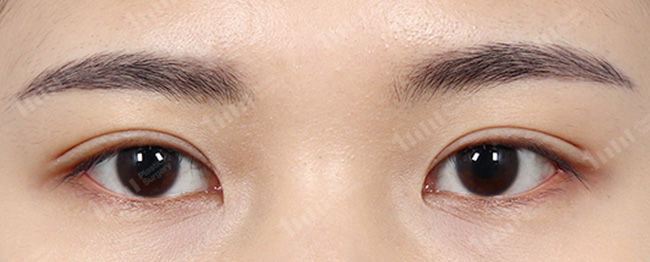
Ptosis correction at 1mm Plastic Surgery: the eyelid lifts to uncover more of the iris, so the eyes look awake and even, without a staring look.
Published with patient consent. Individual results vary with anatomy, healing and the technique used.
All before & after photos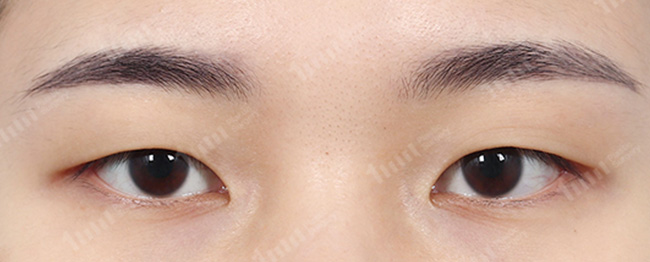
- Days 1–3
Swelling and mild discomfort. Cold compresses and rest.
- Days 5–7
Stitches removed after incisional correction.
- Weeks 2–4
Swelling gradually reduces; daily life resumes.
- 1–3 months
Final eye opening and symmetry settle.

Reviewed by
Dr. Eon Rok Do
Representative Director of 1mm Plastic Surgery and board-certified plastic surgeon. Every operation at 1mm is performed by the surgeon named in your consultation and surgery record — no ghost or proxy surgery. Full surgeon profiles · English-speaking eyelid surgeon in Seoul
Questions
Ptosis correction FAQ.
Still unsure? Message us on WhatsApp and a coordinator will reply in English.
What is ptosis correction surgery?
Ptosis correction adjusts the levator muscle that lifts the upper eyelid, so the lid opens higher and shows more of the iris. It treats drooping lids, uneven eye opening and the tired, sleepy look caused by a weak or stretched muscle.
How do I know if I have ptosis or just excess skin?
In true ptosis the lid margin itself sits low over the iris, often with eyebrow raising to compensate. In skin laxity the lid opens normally but skin hangs over it. A measured eye-opening exam at consultation tells the two apart, and they need different operations.
Is ptosis correction different from double eyelid surgery?
Yes. Double eyelid surgery creates the crease; ptosis correction changes how far the eyelid opens. When the lifting muscle is weak, a crease alone can look heavy, so the two are often performed together.
Incisional or non-incisional ptosis correction — which do I need?
Non-incisional correction suits mild ptosis with thin eyelids and good muscle strength. Incisional correction is recommended for moderate to severe ptosis, thick lids or excess fat, revision cases and age-related ptosis, and gives the most precise, stable muscle tightening.
How long is recovery after ptosis correction?
Swelling and mild discomfort are strongest in days 1–3, stitches come out on day 5–7 after incisional surgery, swelling eases over weeks 2–4, and final eye opening and symmetry settle over 1–3 months. Temporary dryness or tightness usually resolves with time.
What causes ptosis?
Ptosis can be congenital, age-related, or develop after previous eye surgery or years of contact lens wear, all of which can weaken or stretch the levator muscle.
Keep reading
Related procedures & guides.
Start with a photo
Find out if you have true ptosis.
Send a front-facing photo with your eyes open, looking straight ahead and brows relaxed. A coordinator will reply in English with your surgeon's first opinion.