Congenital Ptosis
Present since birth due to underdevelopment of the levator muscle.
1mm Plastic Surgery · Gangnam, Seoul
Incisional ptosis correction is a surgical procedure designed to lift drooping upper eyelids by strengthening, advancing, or reattaching the levator muscle responsible for eyelid elevation.

In short
Incisional ptosis correction is a surgical procedure designed to lift drooping upper eyelids by strengthening, advancing, or reattaching the levator muscle responsible for eyelid elevation. At 1mm Plastic Surgery in Gangnam, Seoul, Korea, incisional ptosis correction is customized according to eyelid anatomy, levator muscle function, degree of ptosis, and facial proportions. The procedure not only improves eye opening and symmetry but can also create a brighter, more refreshed appearance while maintaining natural facial harmony. Levator advancement remains one of the most commonly performed and reliable surgical techniques for correcting upper eyelid ptosis.
Medically reviewed by Dr. Eon Rok Do, board-certified plastic surgeon · Updated October 2026
Overview
Ptosis refers to drooping of the upper eyelid caused by weakening, stretching, or detachment of the levator muscle or its tendon attachment.
Incisional ptosis correction is performed through an eyelid crease incision that allows direct visualization and adjustment of the eyelid-lifting structures.
The procedure may:
Through the incisional approach, the surgeon can directly access and adjust the levator aponeurosis for precise correction.
02
Common symptoms include:
Many patients initially believe they need double eyelid surgery when the primary issue is actually ptosis.
03
Present since birth due to underdevelopment of the levator muscle.
May develop due to:
Aponeurotic ptosis caused by levator tendon stretching is one of the most common forms seen in adults.
Procedure
The procedure is typically performed through an incision hidden within the natural eyelid crease.
Surgical steps may include:
This approach provides excellent control over eyelid contour, height, and symmetry.
Results
Patients often notice:
Correction can improve differences between the eyes and create greater facial balance.
Incisional levator advancement provides durable correction for many patients.
The goal is not to create an artificial look but to restore normal eyelid position.
For many Asian patients, ptosis correction can be combined with double eyelid surgery through the same incision.
Candidates
You may be a suitable candidate if you have:
A detailed examination helps determine the most appropriate surgical plan.
07
Suitable for:
Benefits include:
Recommended for:
Benefits include:
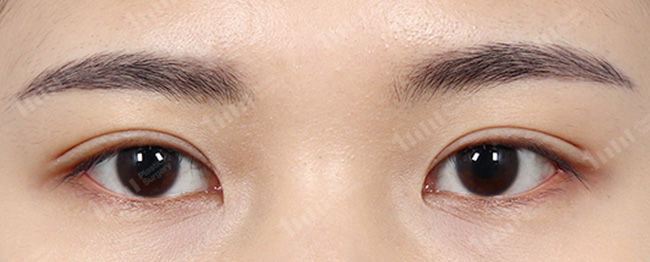
Real result
A ptosis correction result at 1mm Plastic Surgery, Gangnam. Every case is planned around the patient's own anatomy.
Published with patient consent. Individual results vary with anatomy, healing and the technique used.
All before & after photos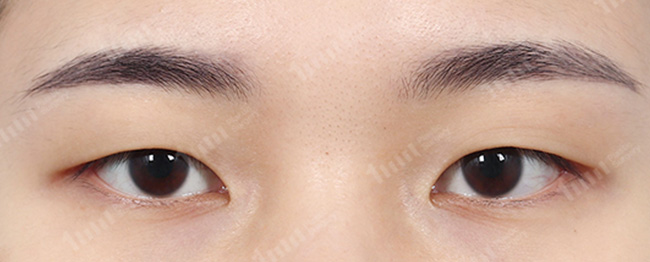
Procedure
Yes.
Common combinations include:
Combined procedures often improve overall eye balance and facial harmony.
Recovery
Healing timelines vary among patients.
Safety
The incision is typically placed within the natural eyelid crease.
Benefits include:
Most scars become progressively less noticeable over time.
Why 1mm
Patients choose 1mm Plastic Surgery because of:
Questions
Still unsure? Message us on WhatsApp and a coordinator will reply in English.
Incisional ptosis correction is a surgical procedure that lifts drooping upper eyelids by adjusting and strengthening the levator muscle system responsible for eyelid elevation.
Ptosis correction improves eyelid-opening function and eyelid height, while double eyelid surgery primarily creates or refines an eyelid crease.
Patients with mild to severe drooping eyelids, asymmetry, or a sleepy appearance may be suitable candidates.
Levator advancement is one of the most common ptosis correction techniques and involves advancing or reattaching the levator aponeurosis to improve eyelid elevation.
Yes. By improving eyelid opening, the eyes often appear larger, brighter, and more alert.
Yes. These procedures are frequently performed together, especially in Asian eyelid surgery.
Most swelling improves significantly within several weeks, while final refinement continues over several months.
The incision is usually hidden within the natural eyelid crease and becomes less noticeable as healing progresses.
Potential risks may include undercorrection, overcorrection, asymmetry, dry eye symptoms, recurrence, and contour irregularities, although these are uncommon when performed by experienced surgeons.
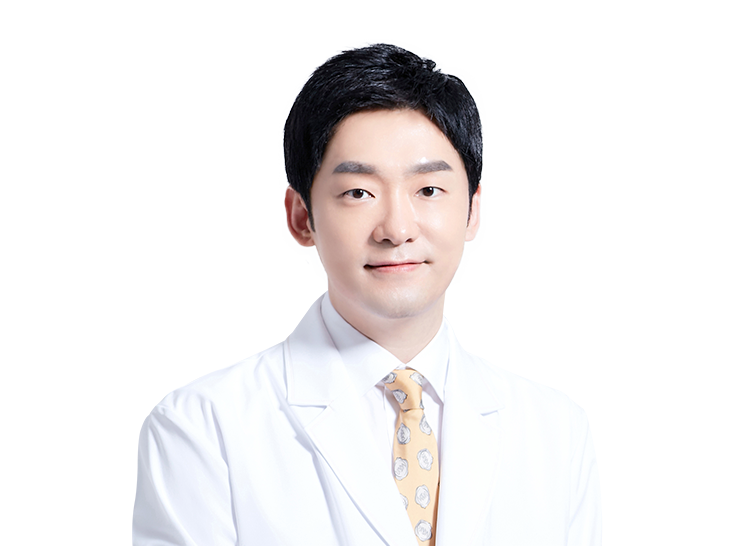
Reviewed by
Representative Director of 1mm Plastic Surgery and board-certified plastic surgeon. Every operation at 1mm is performed by the surgeon named in your consultation and surgery record — no ghost or proxy surgery. Full surgeon profiles · English-speaking eyelid surgeon in Seoul
Start with a photo
Send a front-facing photo of your eyes, open and closed. A coordinator will reply with your surgeon's first opinion and help you plan your visit to Seoul.
Keep reading
Let’s Chat Today!
📞+82-10-9451-1171 (WhatsApp & Text)
English-Speaking & Foreigner-Friendly. We’re Here for You!
Let our board-certified specialists at Very Good Plastic Surgery Clinic help you achieve natural, balanced, and refreshed eyes.






📍 Location
449 Gangnam-daero, Seocho-gu, Seoul
Youngshin Building, 7F · 8F · 9F · 10F
📞 Phone Consultation / Reservation
T. +82-10-9451-1171