Natural Eye Enhancement
Many patients want:
- Better eye definition
- Brighter appearance
- Larger-looking eyes
- Improved facial harmony
Without looking over-operated.
1mm Plastic Surgery · Gangnam, Seoul
Double eyelid surgery for Asian eyes is a highly specialized procedure that requires a thorough understanding of Asian eyelid anatomy, facial proportions, skin characteristics, and aesthetic preferences.

In short
Double eyelid surgery for Asian eyes is a highly specialized procedure that requires a thorough understanding of Asian eyelid anatomy, facial proportions, skin characteristics, and aesthetic preferences. At 1mm Plastic Surgery in Gangnam, Seoul, Korea, every double eyelid procedure is individually designed to complement the patient's natural eye shape while preserving ethnic identity and facial harmony. Whether the goal is creating a natural crease, improving eye definition, correcting asymmetry, or enhancing eye opening through ptosis correction, treatment is customized to each patient's unique anatomy rather than following a standardized crease design.
Medically reviewed by Dr. Eon Rok Do, board-certified plastic surgeon · Updated October 2026
Overview
Asian eyelids often differ from Western eyelids in several anatomical characteristics.
Common features include:
These anatomical differences require specialized surgical techniques and individualized planning.
Overview
Double eyelid surgery creates a natural upper eyelid fold that enhances eye definition while maintaining facial balance.
The procedure may:
The goal is not simply creating a fold, but designing an eyelid crease that suits the patient's facial features.
03
Many patients want:
Without looking over-operated.
Modern Asian eyelid surgery focuses on enhancement rather than westernization.
The objective is to:
Double eyelid surgery may improve:
Creating a crease may help:
Procedure
Suitable for:
Benefits include:
Recommended for:
Benefits include:
Recommended for:
Benefits include:
05
Many patients with Asian eyelids have mild ptosis that contributes to:
Ptosis correction may:
In many cases, ptosis correction and double eyelid surgery are performed together.
06
Some patients have prominent epicanthal folds that partially cover the inner corner of the eyes.
Epicanthoplasty may help:
Not every patient requires epicanthoplasty, and recommendations are individualized.
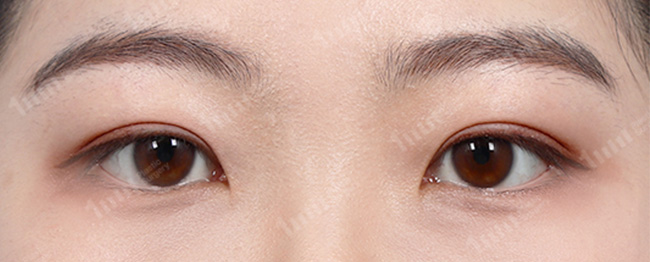
Real result
A double eyelid surgery result at 1mm Plastic Surgery, Gangnam. Every case is planned around the patient's own anatomy.
Published with patient consent. Individual results vary with anatomy, healing and the technique used.
All before & after photos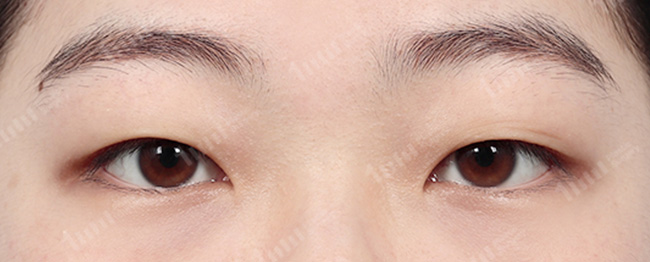
07
At 1mm Plastic Surgery, crease design is based on:
Common crease styles include:
Recovery
Healing varies depending on the surgical technique and individual characteristics.
Results
One of the primary goals of modern Asian eyelid surgery is achieving natural-looking results.
At 1mm Plastic Surgery, surgical planning focuses on:
The goal is for patients to appear refreshed and balanced rather than obviously surgical.
Why 1mm
Patients choose 1mm Plastic Surgery because of:
Questions
Still unsure? Message us on WhatsApp and a coordinator will reply in English.
Double eyelid surgery creates a natural upper eyelid crease while respecting the unique anatomy of Asian eyelids.
Yes. Modern Asian eyelid surgery focuses on enhancement while preserving ethnic identity and facial harmony.
The most natural crease depends on your anatomy, eye shape, and personal preferences. In-fold and in-out fold styles are commonly chosen for natural-looking results.
Yes. Mild ptosis is relatively common and may be addressed together with double eyelid surgery.
Yes. The procedure can improve eye definition and create a more open appearance when appropriately planned.
The best technique depends on eyelid thickness, fat volume, skin elasticity, and desired outcomes.
Incisions are typically hidden within the eyelid crease and become progressively less noticeable during healing.
Most swelling improves significantly within several weeks, while final refinement continues over several months.
Yes. Double eyelid surgery can improve eyelid symmetry and overall facial balance.
Yes. Many international patients travel to Gangnam, Seoul, Korea for specialized Asian eyelid surgery.

Reviewed by
Representative Director of 1mm Plastic Surgery and board-certified plastic surgeon. Every operation at 1mm is performed by the surgeon named in your consultation and surgery record — no ghost or proxy surgery. Full surgeon profiles · English-speaking eyelid surgeon in Seoul
Start with a photo
Send a front-facing photo of your eyes, open and closed. A coordinator will reply with your surgeon's first opinion and help you plan your visit to Seoul.
Keep reading
Let’s Chat Today!
📞+82-10-9451-1171 (WhatsApp & Text)
English-Speaking & Foreigner-Friendly. We’re Here for You!
Let our board-certified specialists at Very Good Plastic Surgery Clinic help you achieve natural, balanced, and refreshed eyes.







📍 Location
449 Gangnam-daero, Seocho-gu, Seoul
Youngshin Building, 7F · 8F · 9F · 10F
📞 Phone Consultation / Reservation
T. +82-10-9451-1171