Longer-Looking Eyes
By revealing more of the inner eye corner, the eyes often appear longer and more defined.
1mm Plastic Surgery · Gangnam, Seoul
Epicanthoplasty is a specialized eye surgery that reshapes the inner corner of the eyes by reducing or releasing the epicanthal fold, allowing the eyes to appear longer, more open, and better defined.

In short
Epicanthoplasty is a specialized eye surgery that reshapes the inner corner of the eyes by reducing or releasing the epicanthal fold, allowing the eyes to appear longer, more open, and better defined. At 1mm Plastic Surgery in Gangnam, Seoul, Korea, epicanthoplasty is customized according to each patient's eye anatomy, intercanthal distance, eyelid shape, and aesthetic goals. The procedure is commonly combined with double eyelid surgery or ptosis correction to create balanced, natural-looking eyes while preserving facial harmony. Epicanthoplasty can lengthen the visible inner portion of the eye and reduce the appearance of a prominent epicanthal fold.
Medically reviewed by Dr. Eon Rok Do, board-certified plastic surgeon · Updated October 2026
Overview
Epicanthoplasty is a surgical procedure designed to modify the epicanthal fold, the skin fold located at the inner corner of the eye.
The procedure may help:
The goal is not simply to enlarge the eyes but to improve overall eye proportions and facial balance.
Overview
An epicanthal fold is a fold of skin that partially covers the inner corner of the eye.
It is common among many East Asian individuals and may:
The severity of the fold varies significantly between individuals.
Candidates
You may be a candidate if you have:
A detailed consultation helps determine whether epicanthoplasty alone or in combination with other procedures would provide the best outcome.
Results
By revealing more of the inner eye corner, the eyes often appear longer and more defined.
Patients frequently notice:
Epicanthoplasty is often combined with double eyelid surgery because reducing medial skin tension may improve crease definition and longevity.
The eyes often appear:
Procedure
The most common form of epicanthoplasty.
It focuses on:
Medial epicanthoplasty is frequently performed together with double eyelid surgery.
Revision surgery may be performed for patients who have:
Advanced revision techniques may restore natural eye contours while minimizing scar visibility.
06
Many patients combine epicanthoplasty with:
Benefits may include:
For suitable candidates, combining procedures often provides more balanced and natural results.
07
Primarily addresses:
Primarily addresses:
Some patients benefit from combining both procedures for comprehensive eye contouring.
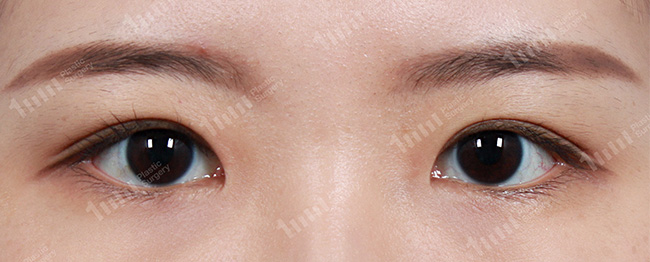
Real result
A canthoplasty result at 1mm Plastic Surgery, Gangnam. Every case is planned around the patient's own anatomy.
Published with patient consent. Individual results vary with anatomy, healing and the technique used.
All before & after photos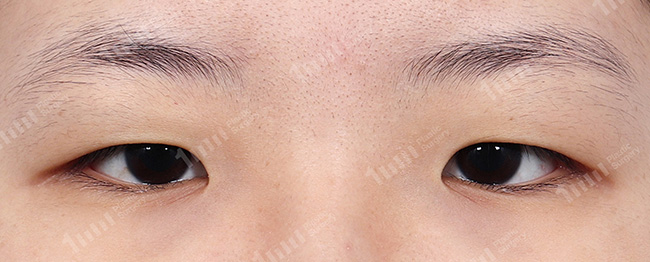
Procedure
The procedure generally includes:
Modern techniques focus on minimizing visible scarring while preserving natural eye contours.
Recovery
Recovery varies depending on the surgical technique and whether additional procedures are performed.
Safety
Modern epicanthoplasty techniques are designed to minimize visible scarring.
Factors that influence scar quality include:
With appropriate planning and healing, scars typically become significantly less noticeable over time.
Why 1mm
Patients choose 1mm Plastic Surgery because of:
Questions
Still unsure? Message us on WhatsApp and a coordinator will reply in English.
Epicanthoplasty is a surgical procedure that reduces or reshapes the epicanthal fold at the inner corner of the eye to create a more open and defined appearance.
An epicanthal fold is a skin fold that partially covers the inner corner of the eye and is commonly seen in many East Asian individuals.
Yes. By exposing more of the inner eye corner and increasing visible eye length, the eyes often appear larger and brighter.
Yes. Many patients combine both procedures to improve eye definition and eyelid crease aesthetics.
It can visually reduce the appearance of wide-set eyes by revealing more of the inner eye corners and improving proportions.
Revision epicanthoplasty is performed to correct scarring, asymmetry, overcorrection, undercorrection, or unsatisfactory previous results.
Modern techniques focus on minimizing scars, and most scars become less noticeable as healing progresses.
Most swelling improves within several weeks, while final scar maturation and refinement continue for several months.
Certain revision techniques may partially restore the appearance of the epicanthal fold in selected cases.
Yes. Many international patients travel to Gangnam, Seoul, Korea for specialized epicanthoplasty and eye contouring procedures.

Reviewed by
Representative Director of 1mm Plastic Surgery and board-certified plastic surgeon. Every operation at 1mm is performed by the surgeon named in your consultation and surgery record — no ghost or proxy surgery. Full surgeon profiles · English-speaking eyelid surgeon in Seoul
Start with a photo
Send a front-facing photo of your eyes, open and closed. A coordinator will reply with your surgeon's first opinion and help you plan your visit to Seoul.
Keep reading
Let’s Chat Today!
📞+82-10-9451-1171 (WhatsApp & Text)
English-Speaking & Foreigner-Friendly. We’re Here for You!
Let our board-certified specialists at Very Good Plastic Surgery Clinic help you achieve natural, balanced, and refreshed eyes.







📍 Location
449 Gangnam-daero, Seocho-gu, Seoul
Youngshin Building, 7F · 8F · 9F · 10F
📞 Phone Consultation / Reservation
T. +82-10-9451-1171