Previous Lower Blepharoplasty
One of the most common causes is previous lower eyelid surgery.
Excessive skin removal or postoperative scarring may pull the lower eyelid downward.
1mm Plastic Surgery · Gangnam, Seoul
Lower eyelid retraction correction is a specialized reconstructive and aesthetic eyelid procedure designed to restore the normal position of the lower eyelid when it sits abnormally low beneath the eye.

In short
Lower eyelid retraction correction is a specialized reconstructive and aesthetic eyelid procedure designed to restore the normal position of the lower eyelid when it sits abnormally low beneath the eye. At 1mm Plastic Surgery in Gangnam, Seoul, Korea, lower eyelid retraction correction is customized according to the cause, severity, eyelid support structures, and previous surgical history. Treatment may involve canthoplasty, canthopexy, spacer grafts, midface support, scar release, or lower eyelid reconstruction to improve eye comfort, protect the ocular surface, restore symmetry, and create a more natural eye appearance.
Medically reviewed by Dr. Eon Rok Do, board-certified plastic surgeon · Updated October 2026
Overview
Lower eyelid retraction occurs when the lower eyelid is pulled downward and no longer rests properly against the lower part of the eye.
Common signs include:
The condition may affect one or both eyes.
02
One of the most common causes is previous lower eyelid surgery.
Excessive skin removal or postoperative scarring may pull the lower eyelid downward.
As tissues weaken with age:
These changes can contribute to eyelid descent.
Some patients naturally have:
which increase the risk of lower eyelid retraction.
Injury involving the eyelid or orbital region may alter normal eyelid positioning.
Certain medical conditions affecting the orbit may contribute to lower eyelid retraction and abnormal eye exposure.
03
Patients commonly report:
More severe cases may expose the ocular surface and cause chronic irritation.
Candidates
You may be a candidate if you have:
A detailed examination is required to determine the underlying cause and appropriate correction strategy.
Procedure
Treatment depends on the severity and cause of the condition.
Patients with postoperative scarring may require:
Canthoplasty strengthens and repositions the outer corner of the eyelid.
Benefits include:
For milder cases, canthopexy may provide additional support without extensive reconstruction.
When significant tissue shortage exists, spacer grafts may be used to:
Some patients benefit from midface lifting techniques that help support the lower eyelid from below.
Results
Correcting eyelid position may reduce:
The eyes often appear:
Restoring lower eyelid position minimizes excessive white space beneath the iris.
Improved lower eyelid support often enhances overall eye aesthetics.
Real result
A under-eye surgery result at 1mm Plastic Surgery, Gangnam. Every case is planned around the patient's own anatomy.
Published with patient consent. Individual results vary with anatomy, healing and the technique used.
All before & after photos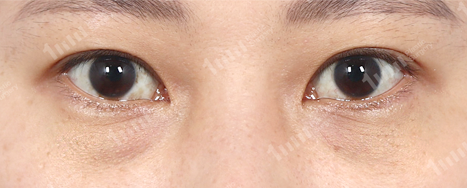
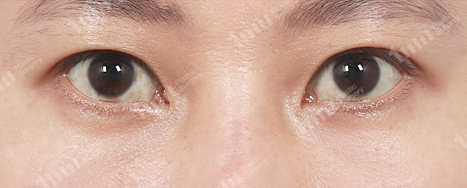
07
Many patients seek correction after previous lower blepharoplasty procedures.
Common concerns include:
Revision surgery focuses on restoring normal anatomy while preserving a natural appearance.
Recovery
Recovery varies depending on the complexity of the correction.
Results
Modern lower eyelid retraction correction focuses on:
The goal is to create eyes that appear healthy, balanced, and naturally proportioned.
Why 1mm
Patients choose 1mm Plastic Surgery because of:
Questions
Still unsure? Message us on WhatsApp and a coordinator will reply in English.
Lower eyelid retraction occurs when the lower eyelid sits abnormally low and exposes excessive white space beneath the iris.
Common causes include previous lower blepharoplasty, aging, congenital anatomy, trauma, and thyroid-related eye conditions.
Yes. Improper eyelid positioning can increase ocular surface exposure and contribute to dryness and irritation.
Scleral show refers to visible white sclera beneath the iris due to a low lower eyelid position.
Yes. Revision surgery is commonly performed to improve lower eyelid position following previous lower eyelid surgery.
Canthoplasty is a procedure that tightens and repositions the outer corner of the eyelid to improve support and eye shape.
Spacer grafts are supportive tissues used to lengthen and elevate the lower eyelid in more severe cases of retraction.
Most swelling improves significantly within several weeks, while final healing and tissue stabilization continue over several months.
Yes. Modern correction techniques focus on restoring normal eyelid anatomy and natural eye proportions.
Yes. Many international patients travel to Gangnam, Seoul, Korea for specialized revision eyelid surgery and lower eyelid reconstruction.
ore balance and beauty to your eyes.

Reviewed by
Representative Director of 1mm Plastic Surgery and board-certified plastic surgeon. Every operation at 1mm is performed by the surgeon named in your consultation and surgery record — no ghost or proxy surgery. Full surgeon profiles · English-speaking eyelid surgeon in Seoul
Start with a photo
Send a front-facing photo of your eyes, open and closed. A coordinator will reply with your surgeon's first opinion and help you plan your visit to Seoul.
Keep reading
Let’s Chat Today!
📞+82-10-9451-1171 (WhatsApp & Text)
English-Speaking & Foreigner-Friendly. We’re Here for You!
Let our board-certified specialists at Very Good Plastic Surgery Clinic help you achieve natural, balanced, and refreshed eyes.






📍 Location
449 Gangnam-daero, Seocho-gu, Seoul
Youngshin Building, 7F · 8F · 9F · 10F
📞 Phone Consultation / Reservation
T. +82-10-9451-1171